

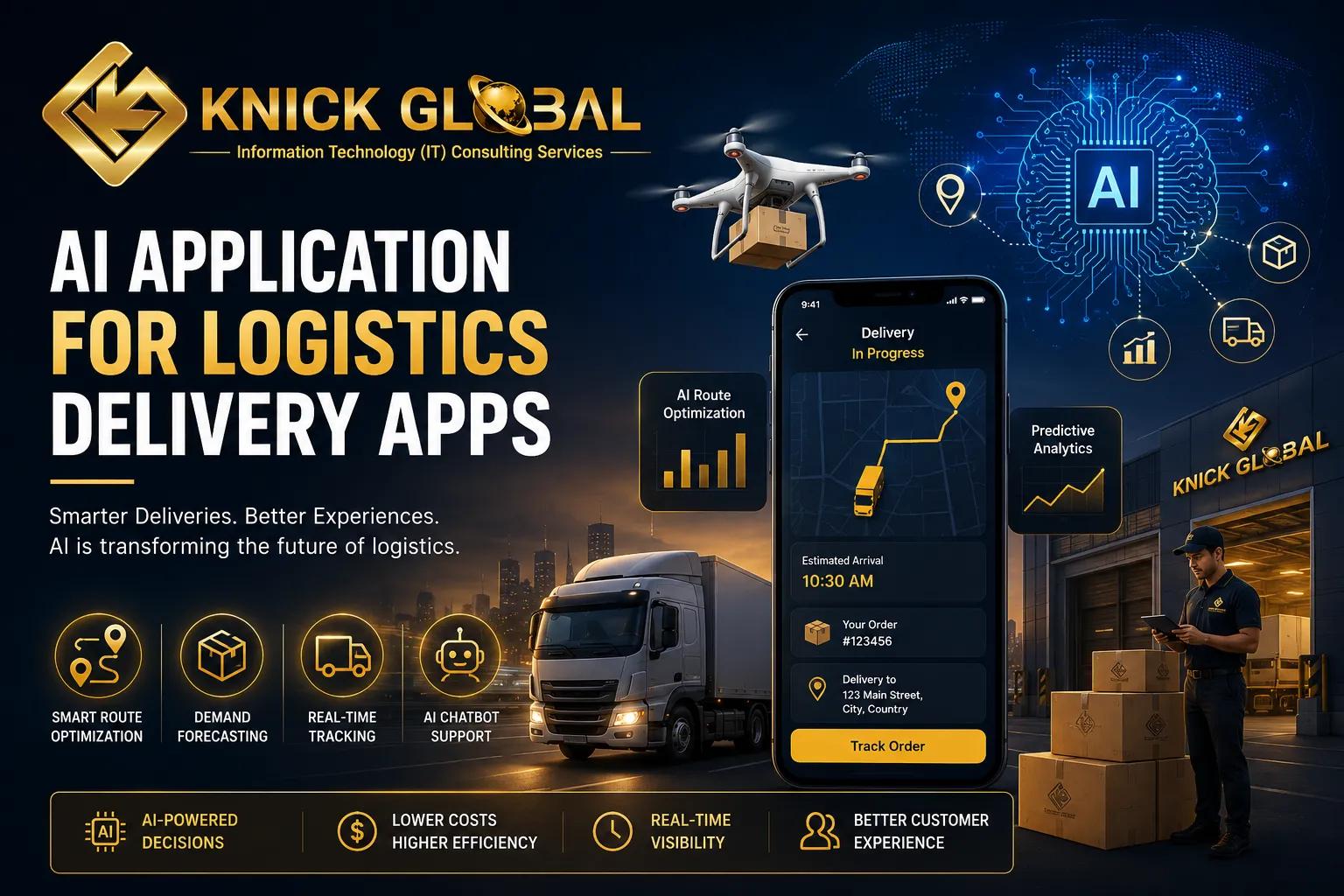
AI Application Development in Oman
The logistics and delivery industry is changing fast. Businesses now need smarter systems to manage deliveries, routes, customer demands, and warehouse operations. That’s why AI application development in Oman is becoming an important solution for modern logistics companies. We can use AI-powered systems to improve delivery speed, reduce operational expenses, and create better customer experiences. From route optimization to automated order tracking, AI helps businesses work more efficiently every day. As digital transformation grows across the Middle East, logistics brands are investing in advanced technologies to stay ahead of competitors and meet rising customer expectations.
AI improves delivery tracking and route planning
Smart automation reduces human errors
Businesses can handle more orders efficiently
Customers receive faster and more accurate services
Why AI is Important for Logistics Delivery Apps
Logistics companies deal with large amounts of data every day. Managing drivers, fuel costs, delivery schedules, and customer requests manually can slow down operations. With artificial intelligence, we can automate many of these tasks and improve business performance. Smart delivery apps can predict traffic conditions, suggest faster routes, and even monitor driver behavior. This makes logistics management more reliable and cost-effective. AI-driven systems also help businesses provide real-time delivery updates, which improves customer trust and satisfaction over time.
AI supports predictive delivery management
Businesses can improve operational efficiency
Real-time updates increase customer satisfaction
Automation reduces unnecessary delivery delays
Smart Route Optimization for Faster Deliveries
One of the biggest benefits of AI in logistics apps is route optimization. Delivery businesses often struggle with traffic congestion, fuel expenses, and delayed deliveries. AI-powered systems analyze real-time traffic data and identify the fastest delivery routes instantly. This reduces fuel consumption and helps drivers complete more deliveries in less time. We can also use machine learning to study previous delivery patterns and improve route accuracy over time. Businesses that invest in intelligent route planning can save money while improving customer service quality.
AI identifies shorter and faster delivery routes
Fuel consumption becomes more manageable
Drivers complete deliveries more efficiently
Customers receive orders on time consistently
Improving Customer Experience with AI
Modern customers expect quick deliveries and real-time updates. AI-based logistics apps help businesses meet those expectations more effectively. Smart chatbots can answer customer questions instantly, while automated tracking systems provide accurate delivery notifications. Personalized recommendations and predictive delivery times also improve the overall user experience. In addition, AI can analyze customer behavior and identify common complaints or delivery issues. This helps businesses improve their services continuously and build stronger relationships with customers in competitive markets.
AI chatbots provide instant customer support
Real-time notifications improve communication
Predictive systems enhance delivery accuracy
Businesses gain valuable customer insights
The Role of Deep Learning in Logistics Apps
Advanced technologies like deep learning development are transforming the logistics sector in many ways. Deep learning models can process large amounts of delivery data and identify patterns that humans may miss. We can use these systems to predict delivery delays, detect fraud, and improve warehouse automation. Deep learning also supports image recognition for package scanning and inventory management. As logistics operations become more complex, intelligent systems can help businesses make faster and more accurate decisions while improving operational performance.
Deep learning improves predictive analytics
Automated systems reduce manual workload
AI-powered scanning enhances inventory tracking
Businesses make smarter operational decisions
AI and Data Analytics for Better Decision-Making
Data is one of the most valuable assets in logistics operations. However, raw data alone is not enough. Businesses need intelligent tools to convert data into useful insights. That’s where data analytics and AI/ML services development become essential. AI-powered analytics systems can monitor delivery performance, identify delays, and forecast customer demand. We can also analyze seasonal delivery trends to improve resource planning. With better insights, businesses can reduce risks and improve long-term operational strategies. Data-driven logistics solutions help companies stay competitive in rapidly growing markets.
AI converts raw data into business insights
Businesses can forecast customer demand accurately
Delivery performance becomes easier to monitor
Smart analytics improves long-term planning
Warehouse Automation and Inventory Management
AI-powered logistics apps are not limited to delivery management alone. They also improve warehouse operations and inventory tracking. Smart systems can monitor stock levels, predict inventory shortages, and automate warehouse workflows. This reduces human errors and speeds up order fulfillment processes. We can also integrate AI tools with barcode scanning and package recognition technologies for better inventory accuracy. Automated warehouse management allows logistics companies to handle larger order volumes while maintaining high service standards and reducing operational costs.
AI improves warehouse organization efficiency
Inventory tracking becomes more accurate
Automated workflows speed up order processing
Businesses reduce operational expenses effectively
Expanding AI Innovation Across the Gulf Region
The demand for intelligent logistics solutions is growing throughout the Gulf region. Businesses are investing in AI application development in Saudi Arabia to modernize transportation and supply chain management systems. At the same time, companies are also focusing on AI application development in Qatar to support faster deliveries and improve customer experiences. AI-driven delivery applications help logistics providers manage operations more effectively in rapidly developing urban markets. As digital transformation continues across the region, AI technology is becoming an important part of modern logistics infrastructure.
Gulf businesses are adopting AI rapidly
Smart logistics improves regional delivery systems
Digital transformation supports operational growth
AI enhances customer satisfaction across markets
Artificial Intelligence and Machine Learning in Delivery Solutions
Modern delivery platforms rely heavily on artificial intelligence & machine learning development to improve efficiency and automation. Machine learning algorithms analyze delivery history, customer behavior, and traffic conditions to create better delivery strategies. We can also use AI-powered systems to automate repetitive tasks and improve decision-making accuracy. As businesses scale their logistics operations, machine learning helps them manage increasing workloads more efficiently. Intelligent delivery apps not only improve operational performance but also support long-term business growth in competitive markets.
Machine learning improves delivery predictions
Automated systems reduce repetitive manual tasks
AI supports scalable logistics operations
Smart apps improve business productivity
AI-Powered Logistics Solutions in Bahrain and Kuwait
Many companies are now investing in AI application development in Bahrain to create intelligent logistics platforms for eCommerce and transportation services. Similarly, businesses are focusing on AI application development in Kuwait to improve delivery speed and warehouse automation. AI-based delivery systems help logistics providers manage customer expectations and streamline supply chain operations effectively. As online shopping continues to grow across the Middle East, AI-driven logistics applications are becoming essential for businesses that want to stay competitive and improve customer satisfaction.
AI supports faster e-commerce deliveries
Logistics operations become more scalable
Warehouse automation improves efficiency
Businesses gain a competitive market advantage
Future Trends in AI Logistics Delivery Applications
The future of logistics delivery apps will become even more intelligent. AI technologies will continue to improve route optimization, autonomous deliveries, and customer engagement systems. Businesses may soon adopt AI-powered drones, robotic warehouse systems, and predictive maintenance tools for delivery fleets. We can also expect stronger integration between AI, IoT, and cloud technologies for smarter logistics management. Companies that invest in innovation today will be better prepared for future market demands and changing customer expectations in the years ahead.
AI-driven automation will continue expanding
Smart technologies will improve delivery accuracy
Businesses can scale operations more efficiently
Future logistics systems will become highly connected
Conclusion
AI is transforming the logistics and delivery industry across Oman and the wider Gulf region. Intelligent delivery applications help businesses reduce costs, improve customer experiences, and manage operations more effectively. From predictive analytics to smart route optimization, AI solutions create faster and more reliable logistics services. At Knick Global, we understand how modern businesses can benefit from advanced AI-powered delivery platforms tailored to their operational goals. If you’re planning to upgrade your logistics systems, now is the right time to explore intelligent technologies that can support long-term business growth and digital transformation.